Stainless Steel Strip
- Home
- Stainless Steel Strip
What Is Stainless Steel Strip?
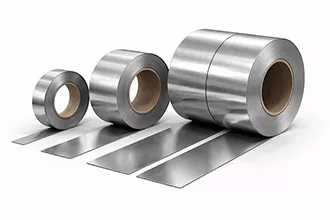
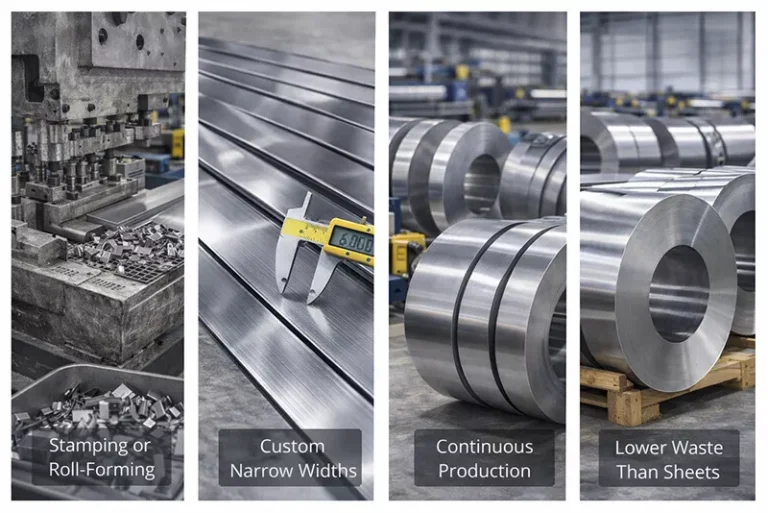
Stainless steel strip is narrow-width flat-rolled stainless steel, produced by slitting coils or precision rolling, and supplied in coils or recoiled packs. Compared with standard coils or cut sheets, strips are designed for continuous, high-precision processing.
You typically choose strip when:
Width accuracy is critical
Edge condition affects downstream forming
Production runs continuously
Material waste must be minimized
Common Strip Grades
As a professional stainless steel plate / sheet supplier, Shripad Elite Steelworks offers a full range of common grades for global applications.
Classification of Stainless Steel Strip
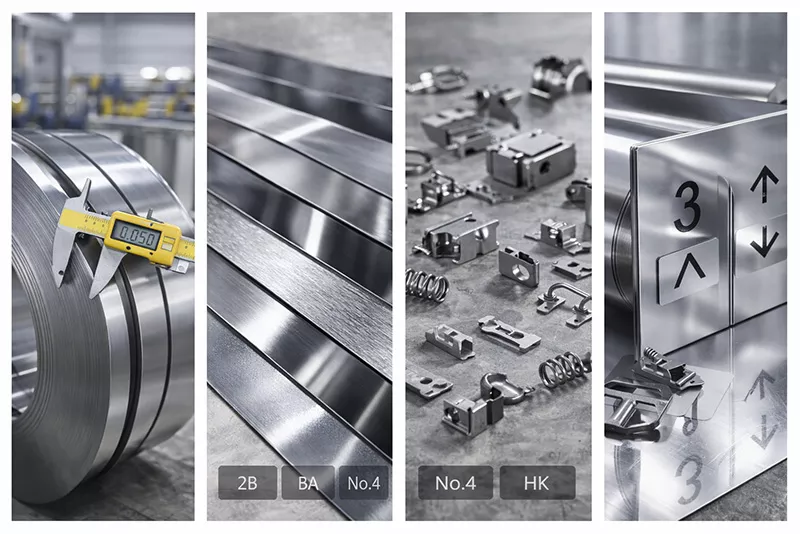
Cold Rolled
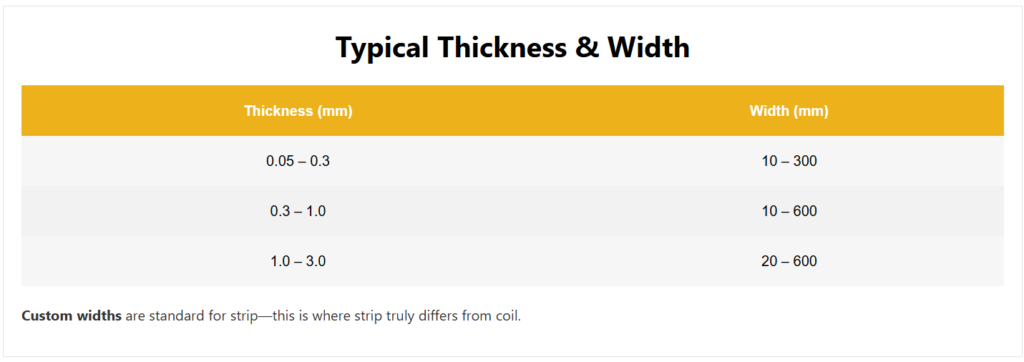
Thickness: 0.05 – 3.0 mm
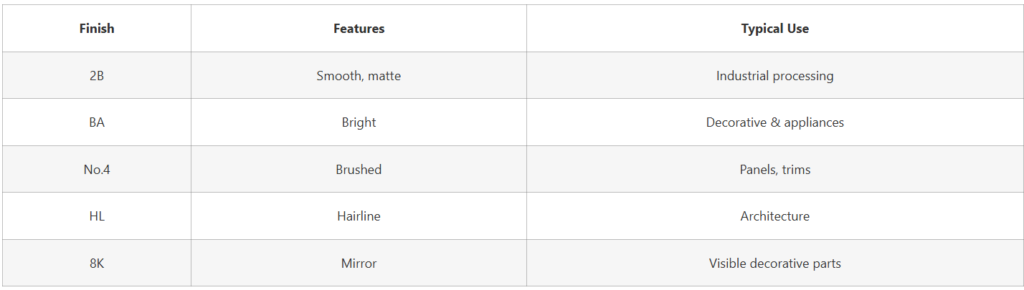
Surface: 2B, BA, No.4, HL, mirror (8K)
Features: excellent flatness, tight tolerance
Best for: precision stamping, springs, decorative parts
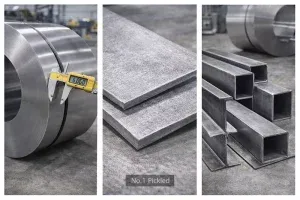
- Thickness: 3.0 – 6.0 mm (limited range)
- Surface: No.1 (pickled)
- Features: higher strength, lower cost
- Best for: structural profiles, heavy-duty forming
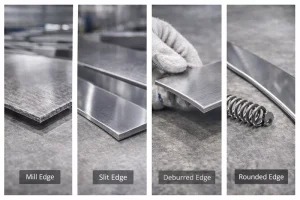
By Edge Condition
Edge quality matters more for strip than for coils.
Mill Edge: as-slit, cost-effective
Slit Edge: clean cut, controlled width
Deburred Edge: safer handling, better forming
Rounded Edge: springs, high-cycle fatigue parts
Common Grades
Austenitic
304 / 304L: general-purpose stamping, housings
316L: corrosion resistance, marine & chemical
321 / 347: elevated temperature applications
904L: aggressive chemical environments
430: appliances, decorative trims
409: automotive exhaust systems
Martensitic
- 410 / 420: blades, wear parts (availability limited)
Duplex & Heat-Resistant
- 2205: high strength, corrosion resistance
- 309S / 310S / 253MA: heat-resistant strip for furnaces
Typical Applications
You’ll find stainless steel strip wherever precision and repeatability matter:
-
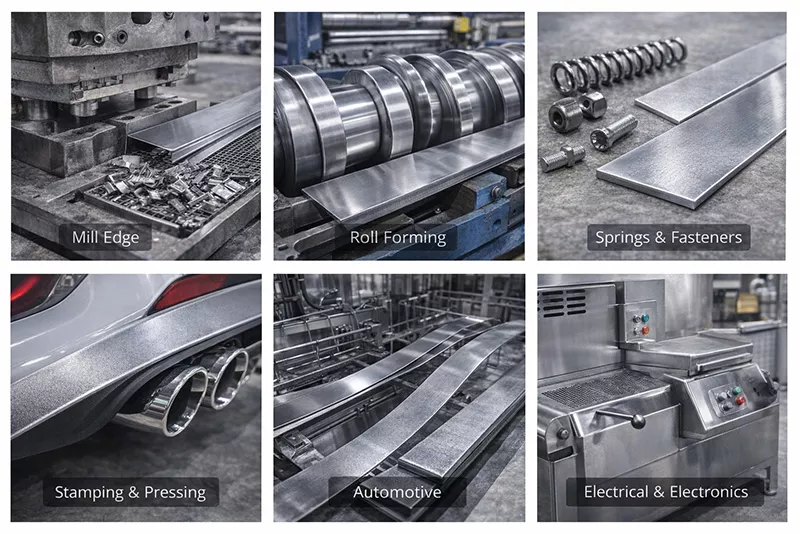
Stamping & Pressing: brackets, clips, terminals
-
Roll Forming: profiles, channels, rails
-
Springs & Fasteners: constant-force springs
-
Automotive: exhaust clamps, trims
-
Appliances: frames, inner liners
-
Electrical & Electronics: connectors, housings
-
Medical & Food Equipment: clean, corrosion-resistant parts
Who Should Buy?
Buying strip makes sense if you:
Run stamping or roll-forming lines
Require custom narrow widths
Consume material continuously
Need tight thickness tolerance
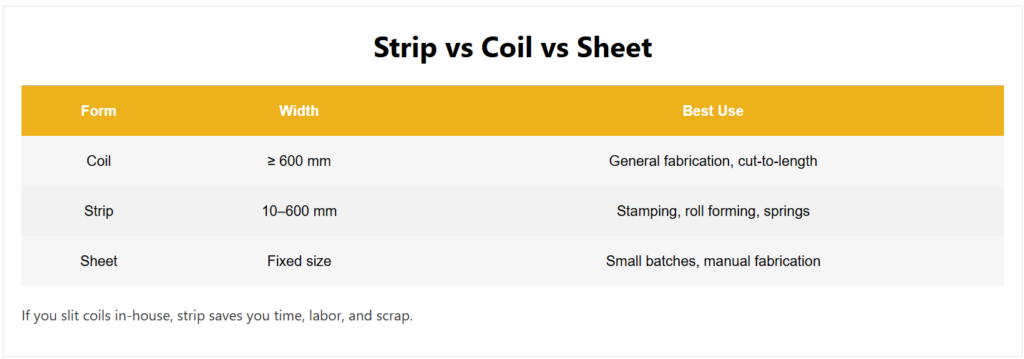
Want lower waste than sheets
If your usage is occasional or manual, sheets may still be more practical.
Processing Options Available from Kongfang Metal
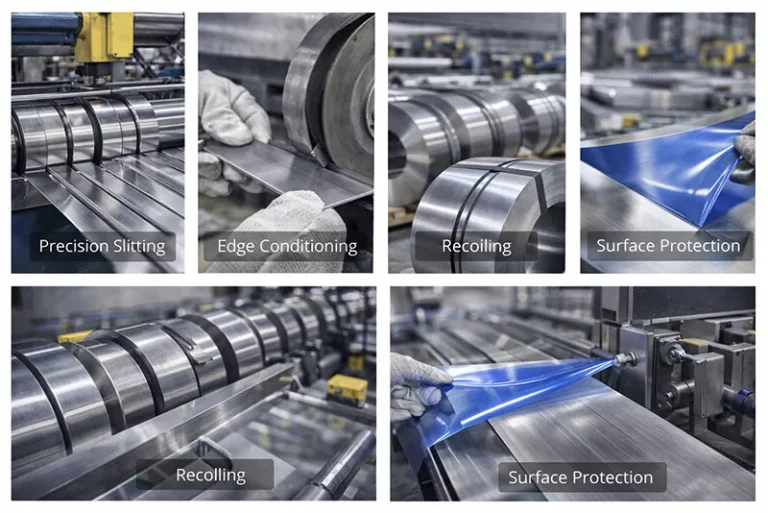
You can source strip as-slit or fully processed:
Precision Slitting: ±0.05 mm width tolerance
Edge Conditioning: deburring, rounding
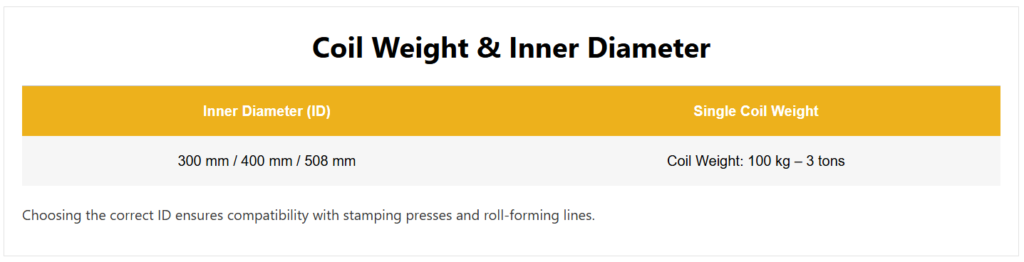
Recoiling: custom ID / OD
Leveling: improved flatness
Surface Protection: PVC / laser film
This reduces downstream adjustment, scrap, and downtime.
Key Buying Considerations
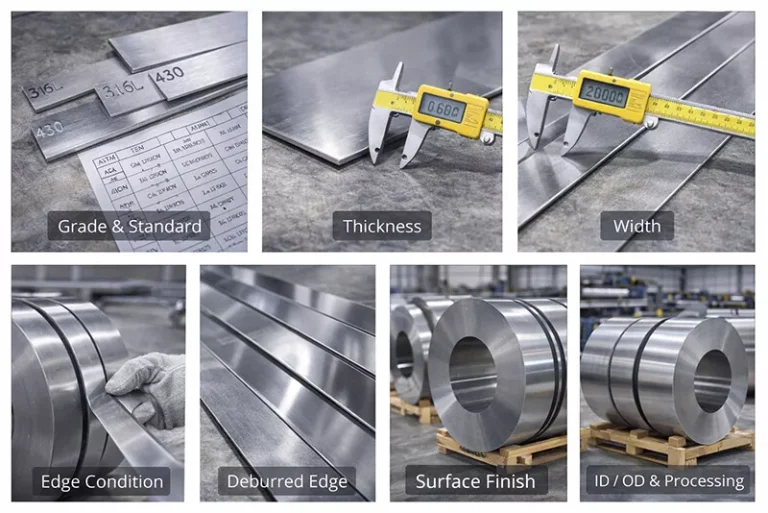
Before placing an order, confirm:
Exact grade & standard (ASTM / EN / JIS / GB)
Thickness tolerance (critical for stamping)
Width tolerance (strip ≠ coil)
Edge condition
Surface finish & protection film
ID, OD, and coil weight
Processing method (slitting, leveling)
Inspection & documentation (MTC, PMI if needed)
Clear specs upfront save time, cost, and disputes.
Packaging & Export Standards
Proper strip packaging prevents deformation and corrosion:
Eye-to-wall or eye-to-sky packing
Moisture barrier + desiccant
Steel pallet or wooden crate (ISPM – 15)
Clear labeling: grade, size, heat number
As an experienced exporter, Shripad group Elite Steelworks prepares strip for long-distance ocean shipment and customs inspection.
Quality Control & Certification
Reliable stainless steel strip should include:
-
EN 10204 3.1 Mill Test Certificate
-
Chemical & mechanical property verification
-
Thickness and width inspection
-
Optional third-party inspection (SGS, TUV)